
For Israel, the removal of armed groups from border areas represents a critical security objective. Israeli policymakers have consistently argued that the presence of heavily armed organizations near the country’s northern frontier creates unacceptable risks to civilian populations and national security
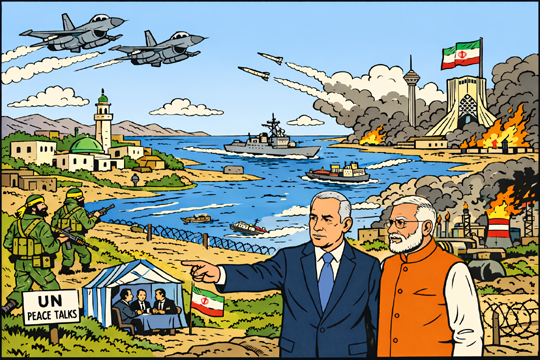
The Middle East has once again become the focal point of global attention as a series of interconnected conflicts, diplomatic initiatives, military confrontations, and economic disruptions reshape the strategic landscape of the region. At the centre of this complex geopolitical environment lies a fragile ceasefire between Israel and Lebanon, a development that has generated cautious optimism among diplomats seeking a broader settlement involving Iran, the United States, and several regional actors. While ceasefires are often welcomed as opportunities for peace, the circumstances surrounding this agreement reveal the immense challenges that continue to confront policymakers and military leaders alike.
The Israel-Lebanon conflict has evolved far beyond a bilateral dispute. It is now deeply embedded within a larger regional struggle involving Iran, its network of allies and partners, Israel’s security doctrine, and the strategic objectives of the United States. Any attempt to understand the significance of the ceasefire must therefore begin with an appreciation of the broader geopolitical framework within which it emerged.
The latest agreement seeks to halt hostilities that have inflicted substantial human suffering and economic damage. Thousands have been killed across multiple theatres of conflict, while millions have been affected by insecurity, displacement, and economic uncertainty. The ceasefire’s conditions are particularly significant because they address one of the central concerns of Israel: the activities of Hezbollah in southern Lebanon. The agreement requires a complete cessation of fire and the withdrawal of Hezbollah operatives from the area south of the Litani River, a region that has long been regarded as strategically important by both sides.
For Israel, the removal of armed groups from border areas represents a critical security objective. Israeli policymakers have consistently argued that the presence of heavily armed organizations near the country’s northern frontier creates unacceptable risks to civilian populations and national security. Lebanon, meanwhile, faces the difficult challenge of balancing domestic political realities with international commitments. Hezbollah remains an influential force within Lebanese society and politics, making the implementation of any agreement particularly complicated.
The role of the United States has been equally important. Washington has invested considerable diplomatic capital in efforts to prevent a wider regional war. American policymakers understand that the interconnected nature of Middle Eastern conflicts means that violence in one arena can rapidly trigger escalation elsewhere. The ceasefire therefore represents not only an effort to stabilize the Israel-Lebanon front but also a broader attempt to create conditions conducive to negotiations involving Iran.
At the same time, developments elsewhere in the Gulf have highlighted the fragility of the regional security environment. Military incidents affecting shipping lanes, energy infrastructure, and strategic transportation hubs have demonstrated how quickly tensions can escalate. These developments have reinforced concerns among governments and international organizations regarding the vulnerability of global supply chains and energy markets.
The importance of the ceasefire extends beyond immediate military considerations. It represents a test of whether diplomacy can still function effectively in an environment characterized by deep mistrust, competing strategic interests, and decades of unresolved disputes. The success or failure of this initiative will likely influence future efforts to negotiate broader agreements addressing regional security, nuclear concerns, economic sanctions, and maritime access.
For the international community, the stakes are exceptionally high. The Middle East remains central to global energy markets, international trade routes, and strategic security calculations. Any prolonged disruption can produce consequences far beyond the region itself. Consequently, the ceasefire has generated attention not only among regional governments but also among major powers seeking to preserve stability in a critical part of the world.
The strategic importance of Lebanon and the Israel-Hezbollah confrontation
The conflict between Israel and Hezbollah has become one of the defining security challenges of the modern Middle East. Unlike traditional interstate wars, this confrontation combines elements of conventional military operations, asymmetric warfare, political competition, and regional power rivalry. Understanding its significance requires an examination of both the historical roots of the conflict and the strategic calculations of the actors involved.
Hezbollah emerged during a period of regional upheaval and gradually developed into a powerful political and military force. Over the years, it has established itself as a major actor within Lebanon while simultaneously becoming one of Iran’s most significant regional allies. This dual identity has allowed Hezbollah to influence both domestic Lebanese politics and broader regional security dynamics.
For Israel, Hezbollah represents a unique challenge. The organization possesses substantial military capabilities and has demonstrated the ability to launch attacks across the border. Israeli security doctrine has therefore focused on preventing Hezbollah from establishing positions that could threaten northern communities. The South Litani Sector has been particularly sensitive because of its proximity to Israeli territory.
The recent ceasefire attempts to address this issue by requiring Hezbollah’s withdrawal from the designated area. Such provisions reflect long-standing international efforts to create buffer zones that reduce the likelihood of direct confrontation. However, implementing these measures remains difficult. Monitoring compliance, verifying withdrawals, and preventing renewed hostilities require significant coordination among multiple actors.
Lebanon faces its own set of challenges. The country has endured years of economic crisis, political instability, and institutional strain. Many Lebanese citizens view renewed conflict as an additional burden on an already fragile state. Consequently, there is considerable domestic pressure to avoid further escalation. Yet the Lebanese government must also navigate internal political divisions and the influence of powerful non-state actors.
The ceasefire therefore represents more than a military arrangement. It is also an attempt to create political space for Lebanon to focus on reconstruction, governance, and economic recovery. Whether this objective can be achieved depends largely on the willingness of all parties to exercise restraint and adhere to agreed commitments.
Regional powers are watching developments closely. Many governments fear that continued fighting could trigger broader instability across the Middle East. Previous conflicts have demonstrated how localized confrontations can rapidly evolve into wider regional crises involving multiple states and armed groups. Preventing such escalation remains a central priority for diplomats and security planners.
The confrontation has also highlighted the changing nature of modern warfare. Drone technology, precision-guided munitions, intelligence operations, and cyber capabilities have transformed military calculations. Traditional geographic barriers provide less protection than they once did, while the speed of modern conflict places immense pressure on decision-makers.
As a result, ceasefire agreements today must address not only troop movements and artillery fire but also a wide range of emerging threats. The success of the Israel-Lebanon ceasefire will therefore depend on whether it can adapt to the realities of twenty-first-century conflict and establish mechanisms capable of preventing renewed violence.
Iran, the United States and the future of regional diplomacy
The ceasefire cannot be understood in isolation from the broader relationship between Iran and the United States. For decades, tensions between the two countries have shaped the strategic environment of the Middle East. Issues such as sanctions, regional influence, nuclear activities, maritime security, and military deployments have repeatedly generated confrontation.
Recent developments suggest that both sides recognize the costs of prolonged conflict. Military operations have imposed significant economic burdens while increasing the risk of unintended escalation. Diplomatic efforts aimed at reaching a broader understanding have therefore acquired renewed importance.
Iran’s position reflects a combination of strategic, economic, and political considerations. The country seeks relief from economic pressures while maintaining what it views as essential security interests. Access to international markets, the ability to export energy resources, and the reduction of financial restrictions remain major priorities. Iranian leaders also seek assurances regarding regional security arrangements and their country’s role within the broader Middle Eastern balance of power.
The United States approaches negotiations from a different perspective. American policymakers remain focused on preventing nuclear proliferation and maintaining freedom of navigation in strategically important waterways. Washington also seeks to reassure regional partners while avoiding a wider conflict that could impose significant economic and political costs.
The Strait of Hormuz occupies a central place in these discussions. As one of the world’s most important maritime chokepoints, the strait serves as a critical artery for global energy supplies. Any disruption can produce immediate consequences for international markets, fuel prices, and economic stability. The closure or restriction of shipping through the strait therefore represents a matter of global concern rather than merely a regional issue.
The diplomatic challenge lies in separating immediate security concerns from longer-term political disputes. Negotiators must address urgent issues such as ceasefires and maritime access while simultaneously laying the groundwork for broader agreements. This requires patience, flexibility, and sustained engagement from all parties involved.
One of the most difficult aspects of diplomacy in the region is the presence of multiple interconnected conflicts. Actions taken in one arena often influence calculations elsewhere. A ceasefire in Lebanon may affect negotiations involving Iran. Developments in the Gulf can shape discussions regarding sanctions or security arrangements. As a result, policymakers must constantly balance competing priorities.
The possibility of a broader agreement has generated cautious optimism among observers. Even limited progress could reduce tensions and create opportunities for further negotiations. However, history suggests that such processes are rarely straightforward. Deep-seated mistrust, domestic political pressures, and divergent strategic objectives can quickly derail diplomatic momentum.
Despite these challenges, dialogue remains essential. Military solutions alone have repeatedly failed to produce lasting stability. Sustainable peace requires political arrangements capable of addressing underlying grievances and security concerns. The current negotiations therefore represent an important test of whether diplomacy can succeed where force has often fallen short.
Energy security, global markets and the economic consequences of conflict
The economic dimensions of the Middle Eastern crisis are as significant as its military and political aspects. Modern economies depend heavily on stable energy supplies, reliable transportation networks, and predictable market conditions. When conflict disrupts these systems, the consequences are felt far beyond the immediate area of fighting.
The Strait of Hormuz occupies a uniquely important position in the global economy. A substantial portion of the world’s oil and liquefied natural gas exports traditionally passes through this narrow waterway. Any interruption can generate uncertainty among traders, investors, and governments. Rising energy prices affect transportation costs, manufacturing expenses, and consumer spending across multiple continents.
Recent military incidents have demonstrated how vulnerable these systems remain. Attacks, threats to shipping, and concerns regarding maritime security have contributed to volatility in energy markets. Even when physical disruptions are limited, perceptions of risk can influence prices and investment decisions.
The impact extends beyond energy. International shipping routes carry a wide range of goods essential to modern economies. Delays or restrictions can disrupt supply chains, increase costs, and create shortages. Businesses operating in sectors ranging from manufacturing to retail must therefore monitor developments in the region closely.
Air transportation has also been affected. Security concerns surrounding airports and regional airspace can disrupt passenger travel and cargo operations. Such disruptions impose additional costs on airlines, businesses, and consumers while complicating efforts to maintain normal economic activity.
For governments, managing these economic consequences requires a combination of diplomatic engagement and strategic planning. Energy diversification, emergency reserves, and alternative transportation routes can help reduce vulnerability. Nevertheless, few regions possess the capacity to completely insulate themselves from major disruptions in the Middle East.
The conflict has highlighted the increasingly interconnected nature of the global economy. Events occurring in one region can rapidly influence markets thousands of kilometres away. Financial institutions, multinational corporations, and national governments must therefore assess geopolitical risks alongside traditional economic indicators.
Energy-exporting countries face a particularly complex situation. Higher prices can generate increased revenues in the short term, but prolonged instability may discourage investment and undermine long-term growth prospects. Energy-importing nations, meanwhile, must contend with rising costs that can contribute to inflation and economic uncertainty.
The pursuit of stability is therefore not merely a diplomatic objective but an economic necessity. A durable settlement would benefit not only the countries directly involved but also the broader international community. Reduced tensions could improve market confidence, facilitate trade, and support global economic recovery.
Prospects for peace and the challenges ahead
The ceasefire between Israel and Lebanon has created an opportunity for diplomacy, but opportunities alone do not guarantee success. The path toward lasting peace remains uncertain and fraught with obstacles. Historical experience demonstrates that ceasefires often represent the beginning of a difficult process rather than the conclusion of a conflict.
One of the primary challenges involves implementation. Agreements negotiated at the diplomatic level must be translated into practical realities on the ground. This requires effective monitoring, clear communication channels, and mechanisms for resolving disputes. Even minor incidents can generate accusations, mistrust, and renewed escalation if not managed carefully.
Political leadership will play a crucial role. Leaders on all sides must balance domestic pressures with international commitments. Public opinion, security concerns, and political competition can influence decision-making in ways that complicate diplomatic efforts. Maintaining support for compromise often proves as difficult as reaching the agreement itself.
Regional dynamics add another layer of complexity. The Middle East contains numerous unresolved disputes, overlapping alliances, and competing strategic visions. Progress in one area can be undermined by tensions elsewhere. Consequently, efforts to preserve the ceasefire must be accompanied by broader initiatives addressing regional security concerns.
The involvement of external powers further complicates the picture. Major international actors possess significant influence but also pursue their own strategic interests. Coordinating these interests in support of a stable regional order requires sustained diplomatic engagement and careful management of competing priorities.
Despite these difficulties, the current moment offers reasons for cautious optimism. The willingness of multiple parties to engage in negotiations suggests a recognition that continued conflict carries unacceptable costs. Economic pressures, humanitarian concerns, and security risks have created incentives for dialogue that did not previously exist.
The future of the region will depend largely on whether these incentives can be translated into durable political arrangements. Achieving such an outcome will require patience, creativity, and a willingness to compromise. It will also require recognition that lasting stability cannot be imposed through military means alone.
The ceasefire represents a fragile but important step toward de-escalation. If successfully implemented, it could contribute to broader diplomatic progress involving Iran, the United States, Israel, Lebanon, and other regional actors. If it fails, the consequences could extend far beyond the immediate participants, affecting global security, energy markets, and international stability.
The Middle East stands at a critical crossroads. The choices made in the coming months will help determine whether the region moves toward greater cooperation and stability or returns to cycles of confrontation and uncertainty. The outcome will influence not only regional politics but also the wider international order for years to come.