
In India, the attitude to win over a guest and not just acquire the guest’s business purse strings, stems from a broader cultural framework where hospitality is traditionally seen as a virtue. Even in modern, corporate hotel environments, this ethos persists. Staff are trained not just to perform tasks but to anticipate needs, often going beyond what is explicitly required
India’s hospitality industry has long carried a quiet but unmistakable reputation: it treats the guest not as a transaction, but as a responsibility. This philosophy, deeply embedded in cultural ethos, reveals itself in ways both grand and microscopic. While global hotel chains pride themselves on standardization and efficiency, Indian hotels often excel in something harder to quantify, care. It is not just about providing a room or a meal; it is about creating an experience that feels attentive, generous, and, at times, unexpectedly personal. When compared to many hotels across the United States and Europe, where every additional amenity may come with a price tag, the Indian approach stands out for its inclusiveness and warmth.
In many Western hotels, the guest experience is carefully itemized. A bottle of water, premium Wi-Fi, early check-in, late check-out, or even a basic breakfast can often attract additional charges. While this model is transparent and structured, it can leave guests feeling nickel-and-dimed. The accumulation of small expenses tends to erode the sense of relaxation that a hotel stay is supposed to provide. The psychological effect is subtle but real, guests become cautious, calculating, and sometimes even irritated.
In India, however, the philosophy often leans in the opposite direction. Hotels, particularly in the mid-range and luxury categories, tend to bundle services in a way that feels generous rather than restrictive. Guests are frequently offered complimentary amenities that would be chargeable elsewhere. This creates a feeling of abundance rather than limitation. The result is not merely satisfaction but a sense of being valued.
This difference is not accidental. It stems from a broader cultural framework where hospitality is traditionally seen as a virtue. The Sanskrit phrase “Atithi Devo Bhava,” meaning “the guest is God,” continues to influence service standards in subtle ways. Even in modern, corporate hotel environments, this ethos persists. Staff are trained not just to perform tasks but to anticipate needs, often going beyond what is explicitly required.
The overlooked art of everyday comfort
One of the most striking examples of this difference lies in something as mundane as ironing facilities. It may seem trivial at first glance, but the state of a hotel iron and ironing board can say a great deal about the attention to detail within an establishment. In many British hotels today, obtaining an iron often involves calling reception and waiting for equipment that may be outdated, poorly maintained, or simply inadequate. The ironing boards are frequently unstable, with ill-fitting covers, and the irons themselves sometimes appear worn to the point of being unreliable.
Contrast this with the experience in Indian hotels. Here, the ironing setup is often not just functional but exemplary. Guests are greeted with clean, modern irons, frequently high-quality models, and sturdy ironing boards that feel robust and well-designed. The difference is immediate and tangible. It signals that even the smallest aspects of a guest’s stay have been considered.
What elevates this further is the presentation. In many Indian hotels, the electrical cords are not left tangled or loosely coiled. Instead, they are arranged with precision and care, almost as if they are part of a visual display. This level of detail goes beyond practicality; it reflects pride in workmanship. It transforms a simple utility into a symbol of professionalism.
This consistency across cities such as Mumbai, Delhi, and Bangalore suggests that it is not an isolated phenomenon but part of a broader standard. It indicates a systemic commitment to quality, even in areas that might be overlooked elsewhere. The result is a guest experience that feels polished and thoughtfully curated.
A tale of two buffet philosophies
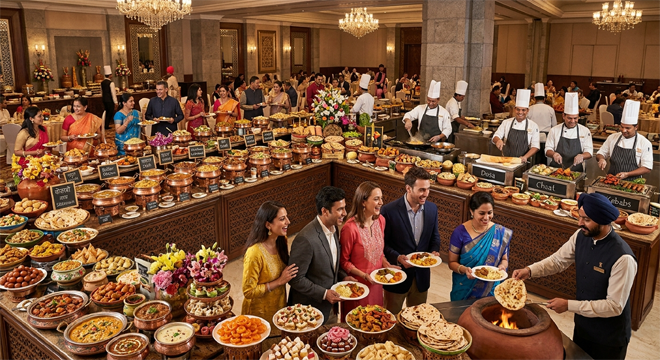
Food is another domain where the contrast becomes particularly vivid. Hotel buffets in India, and similarly in Thailand, are often celebrated for their sheer scale and diversity. They are not merely meals; they are culinary showcases. Guests are presented with an array of options that span regional specialties, international dishes, and live cooking stations. The experience is immersive, offering both variety and freshness.
Indian hotel buffets are especially known for their expansive spreads. A typical breakfast buffet might include everything from North Indian dishes like parathas and chole to South Indian staples such as dosa and idli. Alongside these are Western options like eggs, cereals, and pastries. The inclusion of live counters adds an interactive element, allowing guests to customize their meals in real time.
Thai hotel buffets, while often more restrained in scale, excel in quality and uniqueness. Fresh tropical fruits, aromatic local dishes, and carefully prepared hot items create a dining experience that feels both authentic and refined. The emphasis is on freshness and flavor, with a strong connection to local culinary traditions.
In contrast, many European and American hotel buffets tend to follow a more standardized format. Continental breakfasts often revolve around pastries, cold cuts, cheeses, and cereals. In the United States, hot options such as scrambled eggs and bacon are common, but the overall variety is usually more limited. Australian buffets, while known for high-quality coffee and fresh ingredients, also tend to focus on a narrower range of Western breakfast items.
Why variety and value matter more than ever
The superiority of Asian buffets, particularly in India and Thailand, can be attributed to several key factors. First is value. Guests often receive a significantly larger and more diverse selection of food for a comparable or even lower price. This creates a perception of generosity that enhances the overall experience.
Second is variety. The ability to choose between multiple cuisines and cooking styles allows guests to tailor their meals to their preferences. Whether someone is seeking comfort food, a healthy option, or an adventurous culinary experience, the buffet caters to all.
Third is the presence of live cooking stations. These not only ensure freshness but also add an element of engagement. Watching a chef prepare a dish to order creates a connection between the guest and the food, making the experience more memorable.
Finally, there is balance. Indian and Thai buffets often include a mix of indulgent and health-conscious options. Fresh fruits, juices, and lighter dishes sit alongside richer, more traditional fare. This ensures that the buffet appeals to a wide range of dietary preferences.
The philosophy of service beyond convenience
Room service provides yet another lens through which to examine these differences. In India, room service is often available around the clock, even in mid-range hotels. This 24/7 availability reflects a commitment to convenience and flexibility. Guests are not constrained by rigid schedules; they can order a full meal at any hour.
The style of service is equally notable. Indian hotel staff are often described as warm, attentive, and eager to please. Interactions tend to be more personal, with an emphasis on creating a positive emotional experience. This approach goes beyond efficiency; it aims to build a connection.
The menu offerings also stand out. Guests can typically choose from a wide range of dishes, including regional specialties. This allows them to experience local cuisine without leaving their room, adding another layer of comfort and convenience.
In many Western hotels, room service is more limited. It often operates within fixed hours, usually ending around 10 or 11 PM. The menu is typically smaller, and the pricing can be significantly higher. While the service is efficient and professional, it tends to be more transactional.
Service culture and the human touch
One of the most significant differences lies in the underlying philosophy of service. In India, hospitality is often seen as an experience to be crafted. Staff are encouraged to go the extra mile, whether by accommodating special requests or simply engaging with guests in a friendly manner. This creates an environment that feels welcoming and inclusive.
In contrast, Western service models often prioritize efficiency and consistency. Staff follow structured protocols designed to ensure uniformity across locations. While this approach has its advantages, it can sometimes feel impersonal.
Tipping culture further highlights these differences. In many Western countries, tipping is an expected part of the service experience. Guests must factor this into their overall cost, which can add to the sense of transactional interaction. In India, while tipping is appreciated, it is not always expected in the same way, particularly in mid-range establishments.
The enduring appeal of thoughtful hospitality
Ultimately, the comparison between Indian and Western hotel experiences is not about superiority in absolute terms but about differing priorities. Western hotels excel in standardization, predictability, and efficiency. These qualities are valuable, particularly for business travelers who prioritize reliability.
Indian hotels, on the other hand, often shine in areas that are less tangible but equally important. Attention to detail, generosity in amenities, culinary diversity, and personalized service combine to create an experience that feels richer and more engaging.
The example of the meticulously arranged ironing cord may seem minor, but it encapsulates a broader truth. It reflects a mindset that values presentation, care, and pride in service. When such attention is applied consistently across all aspects of hospitality, from buffets to room service, it results in an experience that stands out.
In a world where travel is increasingly commoditized, these differences matter. They shape how guests feel, not just what they receive. And in that sense, India’s approach to hospitality offers a compelling reminder that the smallest details can make the biggest impact.