
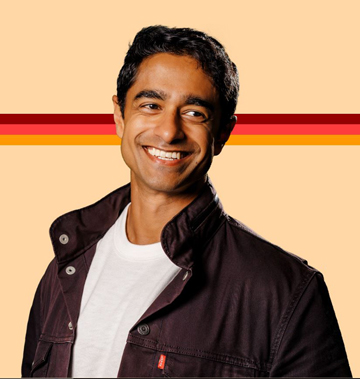
Saikat Chakrabarti has emerged as an influential political strategist and progressive activist. His rise within American politics illustrates how immigrant heritage can coexist with a broader national identity without dominating the narrative of a political career
In the modern United States, political campaigns often emphasize diversity, heritage, and cultural identity. Candidates frequently highlight their ethnic roots, family histories, and immigrant backgrounds to appeal to particular communities. Yet the deeper reality of American electoral politics is more complicated. While diversity is widely celebrated, successful candidates often discover that emphasizing a hyphenated identity—such as Indian-American, Mexican-American, or Italian-American—can become a political liability rather than an advantage.
American voters tend to respond more strongly to candidates who present themselves simply as Americans rather than representatives of a particular ethnic tradition. The logic behind this phenomenon is rooted in the historical development of the United States as a civic nation. The country’s political culture, especially at the national level, rewards candidates who emphasize shared civic values over distinct cultural identities.
In that environment, campaigns built around the promise of bringing “Indianness,” “Mexicanism,” or any other ethnic cultural framework into the political arena can backfire. Voters may interpret such language as suggesting that the candidate’s primary loyalty lies with a specific community rather than with the broader American public.
A useful example of navigating this delicate balance is the career trajectory of Saikat Chakrabarti. Over the past decade, Chakrabarti has emerged as an influential political strategist and progressive activist. His rise within American politics illustrates how immigrant heritage can coexist with a broader national identity without dominating the narrative of a political career.
A technologist enters the political arena
Saikat Chakrabarti was born on January 12, 1986, in Fort Worth, Texas. From the beginning, his life reflected the global flows of migration that have shaped modern American society. His parents were immigrants of Bengali origin who had journeyed through multiple historical transitions before settling in the United States.
Rather than defining his career primarily through ethnic identity, Chakrabarti pursued a path grounded in technology, public policy, and political organizing. His early professional life unfolded not in the traditional world of political institutions but in the rapidly evolving environment of Silicon Valley.
This background gave him a distinctive perspective on politics. Instead of approaching campaigns purely through ideological rhetoric or traditional political networks, Chakrabarti applied technological thinking to the challenge of political organization.
By combining engineering skills with political activism, he became part of a new generation of political strategists who rely heavily on digital tools, data analysis, and online networks to mobilize voters.
Family history and migration
Although Chakrabarti did not foreground his ethnic identity in political campaigns, his family history reflects the complex migrations that shaped many immigrant families in the twentieth century.
His father, Samir Chakrabarti, was born in Dhaka during the final years of British India, before the traumatic upheaval known as the Partition of India in 1947. The partition triggered one of the largest population movements in human history, displacing millions of people across South Asia.
Samir Chakrabarti’s family eventually settled in Kolkata after leaving their ancestral home. Years later, he emigrated to the United States with his wife Sima in 1979. Like many immigrant families, they sought educational and professional opportunities that were difficult to obtain in their countries of origin.
Their children grew up in the United States, immersed in American culture and institutions. Saikat Chakrabarti’s upbringing therefore reflected both the legacy of migration and the realities of American life.
Education and intellectual formation
Chakrabarti’s academic journey illustrates the pathway through which many children of immigrants integrate into the American professional class. He attended Paul Laurence Dunbar High School in Fort Worth, graduating in 2003.
He then enrolled at Harvard University, one of the most prestigious academic institutions in the United States. At Harvard he studied computer science and graduated in 2007 with a Bachelor of Arts degree.
The choice of computer science was significant. During the early twenty-first century the technology industry was transforming global economic structures. Students trained in computing possessed skills that could shape not only business but also politics and social movements.
Chakrabarti’s training in computer science would later become central to his political work. He approached political campaigns as complex systems that could be optimized through digital tools and data-driven strategies.
Silicon Valley and the startup world
After graduating from Harvard, Chakrabarti entered the world of finance and technology. He first worked at Bridgewater Associates, one of the world’s largest hedge funds. The experience provided exposure to high-level financial analysis and economic strategy.
However, his career soon shifted toward the technology sector. He spent several years in Silicon Valley working with startup companies and exploring entrepreneurial ventures.
Among his projects was the co-founding of a web design firm called Mockingbird. He also joined the early team at Stripe, a payments technology company that would eventually become one of the most valuable financial technology firms in the world.
Chakrabarti served as one of the company’s earliest engineers, contributing to the development of its payment infrastructure. As Stripe grew into a global platform used by millions of businesses, early employees received equity stakes that later became extremely valuable.
Financial disclosures later revealed that Chakrabarti held tens of millions of dollars in equity in the company. This financial success allowed him to pursue political activism without relying on traditional political career pathways.
The Bernie Sanders campaign
Chakrabarti’s entry into national politics came during the 2016 presidential campaign of Bernie Sanders. Sanders, a senator from Vermont, launched an insurgent campaign within the Democratic Party that challenged the party’s establishment leadership.
At the time, Sanders’ campaign faced enormous logistical challenges. It relied heavily on grassroots volunteers rather than large corporate donors. Coordinating such a decentralized movement required sophisticated technological tools.
Chakrabarti joined the campaign in its early stages as Director of Organizing Technology. His task was to develop digital infrastructure that could help volunteers organize events, contact voters, and coordinate campaign activities across the country.
Working with software developer Sheena Pakanati, he helped create a messaging platform known as Spoke. Released under an open-source license, the software enabled volunteers to communicate with voters through text messaging.
The platform allowed thousands of volunteers to contact millions of potential voters in battleground states. By distributing organizing tasks across a network of activists, the campaign was able to operate at a scale that would have been impossible using traditional methods.
Many analysts later credited this technological infrastructure with playing a significant role in the success of Sanders’ grassroots campaign.
The creation of Brand New Congress
During the Sanders campaign, Chakrabarti observed a recurring concern among voters. Many supporters believed that even if Sanders became president, Congress would block his legislative agenda.
This perception reflected a broader frustration with the American political system. Voters often viewed Congress as dominated by entrenched incumbents who were disconnected from grassroots concerns.
In response to this problem, Chakrabarti and several colleagues launched a new initiative called Brand New Congress. The project aimed to recruit hundreds of new candidates to run for congressional seats across the country.
The idea was ambitious: replace large portions of Congress with candidates who were committed to progressive reforms and grassroots fundraising. Inspired by the digital organizing model of the Sanders campaign, the initiative sought to build a nationwide network of volunteers and small donors.
Although the initial goal of recruiting hundreds of candidates proved unrealistic, the project succeeded in identifying a number of promising contenders.
The rise of Alexandria Ocasio-Cortez
Among the candidates supported by Brand New Congress was Alexandria Ocasio-Cortez, a young community organizer from the Bronx. At the time she was an unknown political figure challenging a powerful Democratic incumbent, Joe Crowley.
Crowley had represented New York’s 14th congressional district for a decade and was widely considered one of the most influential Democrats in the House of Representatives.
Few political observers believed that Ocasio-Cortez had any realistic chance of winning the primary election. Yet her campaign, supported by grassroots volunteers and innovative digital organizing, gradually gained momentum.
Chakrabarti served as campaign manager and helped design the strategy that ultimately led to one of the most surprising political upsets in recent American history. In June 2018 Ocasio-Cortez defeated Crowley in the Democratic primary, effectively securing a seat in Congress.
Justice Democrats and the progressive movement
Following the success of the Sanders campaign, Chakrabarti helped establish another political organization known as Justice Democrats. The group aimed to recruit and support progressive candidates who challenged entrenched Democratic incumbents.
Justice Democrats relied heavily on digital organizing tools and grassroots fundraising. Volunteers used social media, text messaging, and online networks to mobilize voters.
The organization played a crucial role in building the coalition that supported Ocasio-Cortez’s campaign. Volunteers conducted extensive door-to-door canvassing while also running digital outreach campaigns targeting progressive voters.
This combination of traditional organizing and technological innovation became a hallmark of Chakrabarti’s approach to politics.
Chief of staff in Congress
After Ocasio-Cortez won the general election in November 2018, she appointed Chakrabarti as her chief of staff in Congress. The position placed him at the center of one of the most closely watched congressional offices in Washington.
During this period he helped shape the legislative agenda associated with Ocasio-Cortez and the broader progressive movement.
His tenure was marked by both influence and controversy. Supporters viewed him as an innovative strategist who brought technological thinking to policymaking. Critics argued that his confrontational style sometimes created tensions within the Democratic Party.
The Green New Deal
One of the most significant policy initiatives associated with Chakrabarti’s work was the development of the Green New Deal. The proposal sought to address climate change through a sweeping transformation of the American economy.
Working with congressional allies such as Ed Markey, Chakrabarti helped draft the resolution that introduced the Green New Deal to Congress in 2019.
The proposal combined environmental policies with broader economic reforms, including job creation, infrastructure investment, and social welfare programs.
Although the resolution faced strong opposition from conservative lawmakers, it succeeded in reshaping the national conversation about climate policy.
Leaving congressional office
In August 2019 Chakrabarti stepped down from his position as chief of staff. He left the congressional office to focus on policy development through an organization called New Consensus.
The organization aimed to refine policy proposals related to climate change and economic transformation, particularly those associated with the Green New Deal framework.
Housing and urban policy
In addition to climate policy, Chakrabarti has spoken extensively about housing affordability in American cities. He has argued that the housing crisis requires a broad range of solutions, including increased construction, regulatory reform, and federal financing for new developments.
His proposals emphasize the need to overcome ideological divisions that often prevent pragmatic solutions to housing shortages.
Entering electoral politics
For many years Chakrabarti operated primarily behind the scenes as a strategist and policy advocate. However, he eventually decided to pursue elected office himself.
In February 2025 he announced his candidacy for California’s 11th congressional district. The seat had long been held by Nancy Pelosi, one of the most powerful figures in American politics and a former Speaker of the House.
Chakrabarti framed his campaign as part of a broader effort to renew leadership within the Democratic Party. While expressing respect for Pelosi’s achievements, he argued that new ideas and younger leaders were needed to address contemporary challenges.
Later in 2025 Pelosi announced that she would not seek re-election, leaving the seat open for the first time in four decades.
Identity and political success
Chakrabarti’s political rise illustrates an important dynamic in American politics. Although his family background reflects the global migrations that shape modern America, his public identity has not been defined primarily by ethnicity.
Instead, his career has focused on policy innovation, technological organization, and progressive activism. By presenting himself as an American political actor rather than a representative of a particular ethnic community, he has avoided many of the pitfalls associated with identity-centered campaigns.
The future of a political technologist
As the 2026 congressional election approaches, Chakrabarti represents a new model of political leadership—one shaped by technology, grassroots mobilization, and policy experimentation.
His career demonstrates how the boundaries between engineering, activism, and politics are increasingly blurred in the digital age.
Whether he ultimately succeeds in winning elected office remains uncertain. Yet his influence on modern political organizing is already evident.
In an era when political campaigns rely heavily on data, digital communication, and decentralized volunteer networks, figures like Saikat Chakrabarti embody the transformation of politics itself.