
Many argue that Canada forfeited its position as a world leader in aerospace innovation. A careful look at Avro’s technical achievements, battlefield record, and unrealized export potential suggests that Canada should indeed have continued construction and aggressively pursued global markets
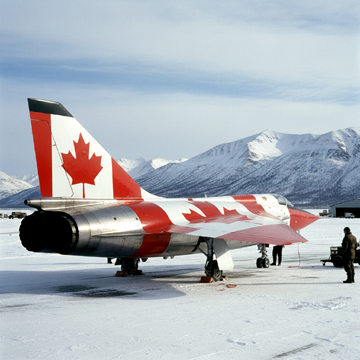
Few aerospace stories evoke as much admiration — and regret — as that of A.V. Roe Canada Limited, better known as Avro Canada. Established in 1945 in Malton, Ontario, as a subsidiary of the British Hawker Siddeley Group, Avro Canada rose from post-war industrial ambition to become one of the most advanced aerospace firms in the world. In less than two decades, it produced aircraft that were not only technologically sophisticated but strategically vital. Chief among these were the Avro Canada CF-100 Canuck and the legendary Avro Canada CF-105 Arrow.
The cancellation of the Arrow project in 1959 and the dissolution of Avro Canada in 1962 remain among the most debated decisions in Canadian industrial history. Many argue that Canada forfeited its position as a world leader in aerospace innovation. A careful look at Avro’s technical achievements, battlefield record, and unrealized export potential suggests that Canada should indeed have continued construction and aggressively pursued global markets.
Origins: Building an aerospace powerhouse
Avro Canada was born in the aftermath of World War II. In 1945, Hawker Siddeley acquired the Victory Aircraft plant in Malton, Ontario — today the site of Toronto Pearson International Airport — and established A.V. Roe Canada Ltd. Under leaders such as Crawford Gordon Jr., the company quickly assembled an extraordinary concentration of engineers, designers, and production specialists.
The timing was critical. The Cold War was emerging. The Arctic was becoming a frontline. Soviet long-range bombers posed a strategic threat to North America. Canada, geographically positioned between the USSR and the United States, required a capable air defense network.
Avro Canada stepped into that role with confidence.
The CF-100 Canuck: Canada’s cold war shield
The CF-100 Canuck was Canada’s first domestically designed and built jet fighter to enter mass production. Unlike many early jet fighters that prioritized speed at the expense of reliability and weather capability, the Canuck was designed as an all-weather interceptor capable of operating in harsh northern climates.
Technical design and capabilities
The CF-100 featured:
- Twin Orenda turbojet engines
- A robust airframe optimized for stability
- Advanced radar systems for nighttime and poor-weather interception
- Internal weapons bays capable of carrying rockets and later air-to-air missiles
At a time when many NATO aircraft struggled in severe weather, the Canuck thrived. Its straight-wing configuration, though not as glamorous as swept-wing contemporaries, provided excellent low-speed handling and stable platform characteristics for radar interception.
Its endurance and climb rate made it especially suited for Arctic patrols, where long-range Soviet bombers might approach undetected.
Battlefront and operational use
The CF-100 did not see direct combat in major wars like Korea or Vietnam, but it served as a critical deterrent aircraft in frontline NATO deployments. Canadian squadrons stationed in Europe during the 1950s operated the Canuck as part of NATO’s integrated air defense. It stood ready to intercept potential Warsaw Pact incursions.
The aircraft also formed a key component of North American air defense under NORAD. Its operational readiness in severe weather gave Canada and its allies confidence that Arctic approaches were not undefended.
While critics may note the absence of dogfight records, Cold War air defense was about prevention. The CF-100’s success lay in maintaining deterrence credibility without escalation.
The CF-105 Arrow: A generation ahead
If the CF-100 was capable, the CF-105 Arrow was revolutionary.
When unveiled in the late 1950s, the Arrow was one of the most advanced interceptor aircraft in the world. Designed to counter high-speed Soviet bombers, it embodied cutting-edge aerodynamics, avionics, and propulsion concepts.
Aerodynamic Superiority
The Arrow featured a sleek delta-wing configuration optimized for supersonic flight. The design reduced drag at high speeds and provided structural strength for high-altitude interception missions. Its large wing area allowed for substantial fuel capacity, giving it extended range — essential for Arctic defense.
The aircraft was capable of Mach 2 speeds, placing it among the fastest interceptors of its era.
Compared to contemporaries like the American F-106 Delta Dart or the British Lightning, the Arrow’s size and payload capacity offered superior endurance and interception reach.
Advanced Avionics
The Arrow incorporated one of the most advanced fire-control systems of its time. Its planned integration with the Astra missile system would have created a fully automated interception platform capable of detecting, tracking, and engaging targets at long range.
The aircraft’s radar and computing systems were groundbreaking. In an era when onboard electronics were still evolving, Avro Canada demonstrated mastery of integrated systems engineering.
Structural Engineering
Constructed with advanced materials and precision engineering, the Arrow was designed for high-altitude performance beyond 50,000 feet. Its robust landing gear and reinforced fuselage enabled operations from northern bases under challenging conditions.
The sophistication of its design impressed visiting American and British officials. Test pilots reported exceptional stability at supersonic speeds.
Why cancellation was a strategic error
The Arrow program was cancelled in 1959, largely due to shifting defense doctrines and cost concerns. The rise of intercontinental ballistic missiles led policymakers to question the future relevance of manned interceptors.
Yet hindsight reveals that manned fighters did not become obsolete. Instead, they evolved. Supersonic interceptors and multirole fighters dominated subsequent decades.
Had Canada continued the Arrow program, it could have:
- Exported to NATO allies seeking advanced interceptors
- Maintained sovereign aerospace capability
- Sustained high-skilled employment
- Positioned itself as a technological equal to major aerospace nations
The abrupt termination led to the dispersal of thousands of engineers and scientists. Many joined NASA and American aerospace firms, contributing to projects like Apollo and advanced missile systems.
Canada lost not merely an aircraft but an ecosystem.
Export potential and global market position
The Arrow’s specifications made it attractive to allied nations facing Soviet bomber threats. Britain, grappling with its own interceptor challenges, might have considered procurement. Smaller NATO countries lacking domestic aerospace industries could have benefited from Canadian production lines.
Canada’s geopolitical alignment with both the United States and Europe positioned it uniquely as a trusted supplier.
Instead, by abandoning the program, Canada ceded the high-end fighter market to American manufacturers.
The Avrocar: Ambition without restraint
Avro Canada also pursued experimental projects such as the VZ-9 Avrocar — a disc-shaped vertical takeoff and landing (VTOL) aircraft. Though ultimately unsuccessful, the project demonstrated boldness.
While critics cite the Avrocar as evidence of overreach, it reflected a culture unafraid of experimentation. Aerospace innovation requires calculated risk.
Comparing Avro to contemporary fighters
In the late 1950s, few aircraft matched the Arrow’s combination of speed, altitude, and range.
The American F-102 and F-106 offered supersonic performance but lacked some of the Arrow’s projected endurance. The British Lightning excelled in climb rate but had limited range.
The Arrow’s twin-engine configuration enhanced reliability — critical for long Arctic patrols.
Technologically, Avro Canada was not trailing global leaders. It was among them.
Economic and industrial implications
Aerospace manufacturing drives supply chains in metallurgy, electronics, propulsion, and computing. By sustaining Avro Canada, the country could have developed deeper industrial clusters. Instead, Canada shifted toward subcontracting roles in global aerospace programs rather than leading them. The closure in 1962 marked the end of Canada’s ambition to be a prime aircraft manufacturer.
The brain drain
When the Arrow was cancelled, over 14,000 workers were affected. Highly trained engineers relocated to the United States. Several played pivotal roles in NASA’s Mercury and Apollo programs. The intellectual capital built in Malton did not vanish. It migrated. Had Canada retained that talent domestically, it might have become a central player in subsequent aerospace revolutions.
Cold war realities and strategic vision
Defence policy must adapt to evolving threats. In 1959, missiles appeared to overshadow aircraft. Yet history demonstrated that interceptors, reconnaissance aircraft, and multirole fighters remained vital. Strategic decisions must weigh short-term cost against long-term capability. In hindsight, Canada’s decision prioritized immediate fiscal concerns over sustained technological leadership.
National confidence and identity
The Arrow symbolized national technological maturity. It proved that Canada could design and build world-class supersonic aircraft independently. National industries often shape identity. Britain has Concorde. France has Dassault. The United States has Lockheed and Boeing. Canada once had Avro.
Lessons for modern aerospace policy
The Avro story underscores several lessons:
- Sustained funding is essential for high-tech industries.
- Premature cancellation can erode talent ecosystems.
- Export markets must be pursued aggressively.
- Sovereign capability enhances strategic autonomy.
In a world once again defined by great-power competition, aerospace innovation is central.
A legacy of what might have been
Avro Canada was not merely a manufacturer. It was a symbol of ambition. The CF-100 Canuck safeguarded Canadian and NATO skies during the Cold War. The CF-105 Arrow pushed the boundaries of aerodynamics and avionics. Even experimental projects reflected bold imagination.
Canada should have continued construction and export of its advanced fighters. The technological superiority demonstrated by the Arrow was real. Its cancellation curtailed a trajectory that might have placed Canada among the permanent leaders of global aerospace.
Today, the Arrow remains a reminder: innovation demands courage — not only from engineers but from policymakers.
Avro Canada proved that a nation of modest population could build aircraft to rival the world’s best. History suggests it deserved the chance to keep flying.