
Thank God Prince Harry did not marry to maintain the royal decorum and leave his wife for a mistress, with whom he can live after wishing his wife’s death. Meghan Markle does not realise that she is in a relationship where Prince Harry married for love and is sticking to his decision instead of going off with a Kingdom Keep to Balmoral
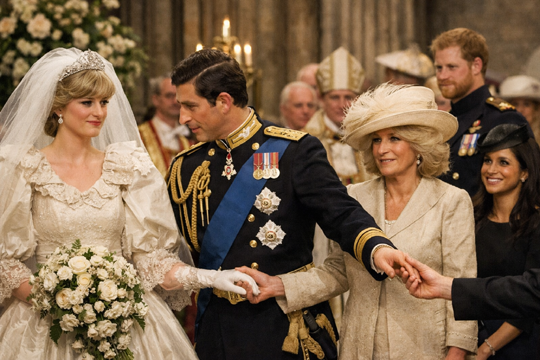
When Prince Harry chose to marry Meghan Markle, he did so in a way that seemed to reject centuries of whispered royal compromise. The British monarchy has long carried a mythology of duty over desire, protocol over passion. For generations, royal marriages were often portrayed as arrangements that served stability, optics, or dynastic necessity. Against that backdrop, Harry’s union with Meghan was framed as something startlingly simple: a marriage for love.
In public debate and commentary, that distinction continues to matter. There are those who argue that Harry did not choose the traditional path of maintaining royal decorum at any emotional cost. He did not appear to marry for appearance’s sake while reserving affection for another life behind palace walls. Instead, he made a decision that upended his place within the institution itself. In doing so, he stepped away from the structure that defined him from birth.
But love stories in the public eye rarely remain uncomplicated. Today, as reports swirl of staff departures and internal tensions, the narrative has shifted from fairy tale to friction. Meghan, according to insiders, is facing what some describe as a deeply unsettling moment. And Harry, once seen as the prince who chose love over institution, now finds himself at the center of a new kind of scrutiny.
Breaking from the script
To understand the present turbulence, one must revisit the rupture of 2020. When Harry and Meghan stepped back from their roles as senior working royals, they disrupted a carefully calibrated system. The move, sometimes referred to as “Megxit” in tabloid shorthand, was presented by the couple as a necessary step toward autonomy—financial, emotional, and geographic.
They relocated to California, seeking a fresh chapter built on media ventures, philanthropy, and advocacy. Their foundation, Archewell, became the symbolic anchor of this new life. In interviews and documentaries, the couple spoke candidly about mental health, media intrusion, and institutional rigidity. They positioned themselves not as defectors but as reformers, determined to define service on their own terms.
The gamble was enormous. Leaving the monarchy meant leaving behind guaranteed relevance, structured roles, and institutional support. In return, they embraced the volatility of private enterprise and Hollywood branding. Success would depend not on tradition but on strategy.
A staff exodus raises questions
Recent developments, however, have cast a shadow over that strategy. The departure of Meredith Maines, their chief U.S. publicist, after just ten months, marked one significant shift. Almost simultaneously, James Holt—longest-serving aide and executive director of Archewell—stepped down after nearly five years.
Holt’s exit followed closely on the heels of the foundation’s rebrand to Archewell Philanthropies and a shift to a fiscal sponsorship model. Officially, he is relocating to London with his family and will continue as a philanthropic advisor. Yet the timing has raised eyebrows among royal commentators and media analysts.
Some insiders allege that Meghan has been deeply rattled by the dual departures. Phrases such as “full meltdown mode” have circulated in tabloid accounts, suggesting heightened tension behind closed doors. Whether those descriptions are exaggerated or accurate, they underscore a broader perception: that the Sussex operation may be undergoing a period of instability.
Royal commentator Hilary A. Fordwich described the situation as indicative of a “volatile, erratic operation.” Reports have suggested that nearly two dozen staff members have departed since the couple’s relocation to the United States. While turnover is not uncommon in high-profile organizations, the cumulative effect can create a narrative of churn.
In the public imagination, staff exits become symbolic. They hint at internal friction, management challenges, or strategic confusion. For a couple whose brand relies on credibility and cohesion, such optics matter.
The fear of a fractured dream
According to unnamed sources, Meghan fears that the life she built after leaving the United Kingdom is beginning to crack under pressure. The specter of “crawling back” to Britain—an idea that surfaces frequently in speculative commentary—haunts such narratives.
Yet returning would not be simple. The couple’s relationship with the royal family remains complex. Their media appearances, particularly the candid interview with Oprah Winfrey and subsequent projects, reshaped public perception on both sides of the Atlantic. Reconciliation, if it were ever sought, would require more than logistics; it would demand trust.
For Meghan, the stakes are deeply personal. She left behind not only a country but a system that she has described as isolating. The California chapter was meant to offer freedom and creative control. If that vision falters, critics will be quick to frame it as failure rather than evolution.
Blame and the burden of expectation
Insiders claim that Meghan has, at times, blamed Harry for her troubles. Such allegations—common in celebrity reporting—reflect the pressure cooker environment in which they operate. When an enterprise falters, especially one so closely tied to personal identity, fault lines can emerge.
But it is equally plausible that these narratives oversimplify complex dynamics. A marriage under relentless scrutiny carries unique strains. Every staffing decision becomes a headline; every rumor becomes a trend. Blame, in such an environment, is easily assigned by outsiders.
Harry’s own journey complicates the picture. He has long spoken about trauma, loss, and the weight of royal expectation. His decision to step back was framed as protective—of his wife, his children, and his mental health. If Meghan now questions aspects of that decision, it would represent not betrayal but human doubt.
Still, the symbolism is potent. The prince who chose love over crown now faces questions about whether that choice has delivered the stability it promised.
Archewell’s identity crisis
The rebranding of Archewell into Archewell Philanthropies and its shift to a fiscal sponsorship model signal strategic recalibration. Such models can streamline operations and reduce administrative burden, but they may also suggest scaling down.
Foundations thrive on donor confidence and measurable impact. Any perception of shrinkage—whether in donations, staff, or visibility—can trigger concern. For critics, the restructuring reinforces an existing narrative that the Sussex brand has struggled to maintain momentum.
Yet philanthropy is rarely linear. Organizations pivot, restructure, and refine focus as they mature. It is possible that Archewell’s changes represent adaptation rather than decline. The challenge lies in communication: convincing stakeholders that transformation equals progress.
The culture of exit interviews
Reports that Meghan fears former employees could band together to share negative experiences reveal a modern anxiety. In the digital age, reputations can unravel quickly. Memoirs, podcasts, and anonymous leaks shape public discourse with astonishing speed.
For public figures, the possibility of coordinated criticism looms large. Even unverified claims can gain traction. The Sussexes, having themselves leveraged media to tell their story, understand the power of narrative.
That awareness may amplify sensitivity to internal dissent. Every departure carries not just operational implications but reputational risk.
A prince, a poster and pop culture
Amid the turbulence, an anecdote surfaced that offered a glimpse into Harry’s past. Canadian actress Neve Campbell revealed on The Jonathan Ross Show that Harry once confessed to having a poster of her in his bedroom during his youth.
Campbell, who rose to fame through Party of Five and the Scream franchise, described the revelation as “a little awkward” but charming. The encounter occurred at a mutual friend’s birthday party, where she initially did not realize whom she was meeting.
The story, lighthearted and nostalgic, humanized Harry. It painted him not as embattled royal but as a former teenager with a celebrity crush. Such moments remind audiences that before titles and headlines, he was simply a young man navigating adolescence under extraordinary circumstances.
The dance of perception
Public perception of Harry and Meghan has oscillated dramatically. To supporters, they represent courage—challenging tradition and speaking openly about mental health and systemic issues. To critics, they embody entitlement—leveraging royal status while criticizing the institution.
These polarized views shape interpretation of every development. Staff exits become evidence of chaos or routine restructuring, depending on perspective. Anecdotes about teenage posters become endearing or trivial.
The couple’s challenge lies in transcending polarization. Sustained influence requires credibility across divides. That, in turn, depends on consistency.
Marriage in the age of narrative
At its core, the current drama underscores a universal truth: marriage is complex. Add global fame, institutional rupture, and multimillion-dollar ventures, and complexity multiplies.
The idea that Harry married for love rather than decorum carries moral weight in public discourse. It suggests authenticity. Yet authenticity does not immunize a couple against external pressure. Love may inspire departure from tradition, but it cannot shield against operational missteps.
If Meghan is indeed blaming Harry, it may reflect frustration with outcomes rather than regret over intent. If Harry feels burdened by expectations, it may stem from the enormity of what he relinquished.
The story, then, is less about betrayal of decorum and more about the cost of reinvention.
California dreaming and reality
California promised reinvention. In Montecito, the Sussexes found privacy, celebrity neighbors, and proximity to the entertainment industry. They signed lucrative deals, produced content, and cultivated philanthropic partnerships.
But Hollywood operates by different rules than royalty. Relevance is earned continuously. Audiences are fickle. Brands must evolve or fade.
The Sussexes’ transition from institutional roles to entrepreneurial figures required not only vision but operational excellence. Staff stability, donor engagement, and media strategy are not ceremonial duties; they are business fundamentals.
Any misalignment in those areas becomes visible quickly.
The long view
History may ultimately judge Harry’s choice less by quarterly turbulence and more by long-term impact. Did stepping away enable greater personal happiness? Did Archewell contribute meaningfully to causes it championed? Did their candid conversations shift public dialogue?
For Meghan, the question is equally profound. Has California delivered empowerment? Has autonomy outweighed scrutiny?
These questions transcend gossip. They touch on broader themes of agency, identity, and partnership.
Between crown and coast
The contrast between Balmoral’s austere tradition and Montecito’s sunlit modernity symbolizes the couple’s journey. One represents continuity; the other, change. Harry’s refusal to live a divided life—publicly married, privately detached—earned admiration from those weary of royal hypocrisy narratives.
Whether that refusal can sustain a stable enterprise remains to be seen. Love may anchor a marriage, but institutions—royal or philanthropic—require structure.
Beyond the headlines
In the end, the Sussex saga is not merely a tale of staff exits or teenage posters. It is a study in transition. A prince chose love over tradition. A duchess chose reinvention over protocol. Together, they built a life that defied precedent.
Now they face the inevitable test of any bold choice: durability.
If Meghan feels shaken, it is because stakes are high. If Harry stands firm, it is because his original decision—to marry for love and leave rather than live divided—still defines him. The monarchy endures through continuity. The Sussexes seek relevance through change. Between those poles lies tension, narrative, and the ongoing evolution of a modern royal marriage.