
What will be the role of the NDA government’s Ministry of Commerce’s in doling out work sites to European companies in India. Not all regions in India have the infrastructure or educational ecosystems to attract high-skilled service jobs, potentially widening regional inequalities if planning is not inclusive
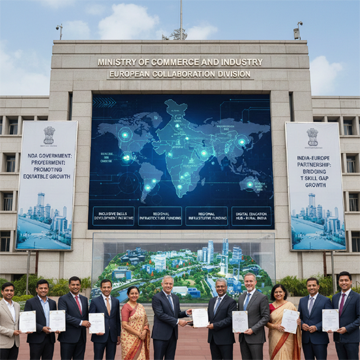
The India–EU FTA — often described in media as one of India’s most significant trade agreements in decades — is poised to liberalise markets for goods and services between India and the EU, eliminating or sharply reducing tariffs on most goods and enabling smoother regulatory cooperation. It is expected to boost bilateral trade, enhance competitiveness, and deepen economic linkages across sectors. Under this agreement, tariffs on more than 99% of Indian exports to the EU by trade value are being reduced, and significant tariff and non-tariff barriers are being addressed to ease market access for Indian manufacturing and services sectors.
The transformative potential of the FTA lies not just in trade volumes but in employment creation, especially where India already has strengths — from labour-intensive manufacturing clusters to services hubs that power the global digital economy.
Regional winners in manufacturing: Factories and export-driven jobs
1. Gujarat: The Export Powerhouse
Among Indian states, Gujarat stands out as a key beneficiary of the FTA owing to its established export ecosystem in textiles, chemicals, engineering goods and gems & jewellery. Major cities like Surat, Bharuch–Vadodara and Rajkot are poised for expanded factory output and jobs.
Benefits
- Strong export clusters: Gujarat’s textile and diamond industries are already export-oriented, and zero tariffs into the EU significantly improve competitiveness.
- Port infrastructure: Proximity to ports like Kandla and Nhava Sheva facilitates streamlined international logistics and attracts foreign investment.
- Integrated supply chains: Chemical industries around Bharuch–Vadodara benefit from tariff eliminations on chemical exports.
Drawbacks
- Competition pressure: Industries must compete with zero-duty exporters (e.g., Bangladesh, Vietnam) even within the EU, requiring continual cost and quality improvements.
- Environmental and labour compliance: Export growth can increase scrutiny on environmental standards and labour practices, requiring greater investment in compliance.
Economic diversification in Gujarat can accelerate factory hiring, especially in labour-intensive segments like textiles and gems — important for job-rich expansion.
2. Tamil Nadu: Textile and electronics base
Tamil Nadu has deep-rooted manufacturing clusters, especially in apparel (Tiruppur), automotive components, leather, and electronics manufacturing — sectors that can see expanded EU orders.
Benefits
- Global competitiveness: Tiruppur’s apparel units — already globally known — can leverage duty-free access to double shipments.
- Engineering & electronics growth: Locations like Chennai and Coimbatore can scale up industrial employment as engineering goods and electronics exports rise.
Drawbacks
- Assembly vs design value: To capture more skilled jobs, the state needs to move up the value chain — beyond assembly — toward design and R&D.
- Infrastructure strain: Rapid expansion in factories could stress logistics and utilities unless upgraded.
Tamil Nadu’s balanced mix of labour-intensive and capital-intensive industries makes it attractive for employers, but growth must be managed sustainably.
3. Maharashtra: Diversified industrial base
Maharashtra — especially Mumbai, Pune, Thane-Raigad and other industrial belts — is expected to see increased export orders in textiles, pharmaceuticals, engineering goods and gems & jewellery.
Benefits
- Skill-ready workforce: Access to educated workers in large cities like Mumbai and Pune attracts factory investment and high-value manufacturing.
- Pharmaceutical exports: Zero tariffs on pharmaceuticals can expand production facilities and jobs.
- Diversified industry clusters: From metals to engineering goods, Maharashtra offers depth in industrial sectors.
Drawbacks
- Cost of doing business: Higher urban costs — land, utilities, staffing — may deter some manufacturing players compared to smaller states.
- Competition from within India: States with lower wage structures may attract more low-skill factory jobs.
Maharashtra’s strength lies in advanced manufacturing, drawing not just factories but integrated supply chains that reinforce employment opportunities.
4. Uttar Pradesh: Labour-intensive hub
Uttar Pradesh (UP) is uniquely positioned to benefit from the FTA’s focus on labour-intensive sector exports — leather, furniture, handicrafts, agri-products — with substantial employment potential.
Benefits
- Large workforce: UP’s demographic advantage means factories can scale with abundant labour at competitive costs.
- Cluster potential: Noida’s electronics and western UP’s agri-products add diversity.
Drawbacks
- Skills mismatch: To tap factory jobs effectively, skills development and training are essential.
- Infrastructure challenges: UP must invest in logistics and utilities to attract large-scale industrial setups.
UP’s ability to generate high volumes of jobs stems from its labour pool and the broad nature of output that can serve European markets.
5. Other notable manufacturing regions
Several states beyond the big four also stand to gain significant factory activity:
- West Bengal: Tea, marine exports and handicrafts stand to benefit — especially in Digha and Haldia coastal belts.
- Telangana: Textile and advanced manufacturing clusters (e.g., Hyderabad) can expand production.
- Rajasthan: Jewellery, furniture and artisanal clusters near Jaipur and Jodhpur can tap EU demand.
These regions vary in scale but can create localized factory employment — especially where labour-intensive industries exist or where export-oriented ecosystems are developing.
Regional winners in services: Offices, IT, datacentres and high-skill jobs
While manufacturing gains attention, service sectors — especially IT development labs, consulting firms, legal services, business services, and datacentres — are equally poised for growth under the FTA, thanks to enhanced market access and cooperation.
Although exact geographic insights for datacentres and legal/consulting clusters are less explicitly covered in initial state-level FTA analyses, broad trends can be projected based on existing hubs and comparative advantages.
1. Bengaluru: India’s tech capital
Bengaluru remains the unquestioned centre for IT services, software development labs, startup ecosystems, and global corporate R&D centres.
Benefits
- Talent density: Deep pools of software engineers and tech specialists attract multinational companies to scale operations.
- Innovation ecosystems: Startups, unicorns, and innovation labs create high-value jobs beyond low-cost service roles.
- Datacentre growth: The region is already attracting investments in cloud and datacentre infrastructure due to connectivity, power options, and proximity to tech companies.
The FTA’s likely enhancement of cross-border digital services and data flows (subject to security norms) can drive European clients to expand India-based operations, boosting employment in software, cloud, cybersecurity and tech consulting.
Drawbacks
- Infrastructure strain: Congestion, real estate costs, and power challenges may cap growth without continued upgrades.
- Competition from Tier-2 cities: Other cities offering lower costs (e.g., Hyderabad, Pune) might lure new datacentres and service centres.
Bengaluru will likely remain a magnet for high-end service jobs — from AI development to legal services serving global clients.
2. Hyderabad and Telangana: IT and pharma services
Hyderabad has emerged as a strong competitor to Bengaluru in IT and pharmaceuticals, with a robust services sector that includes tech labs, biotech research, and outsourcing firms.
Benefits
- Balanced ecosystem: IT, life sciences and bioinformatics converge, enabling diversified high-value employment.
- Cost-competitiveness: Lower costs compared to larger metros attract both Indian and foreign firms.
Drawbacks
- Talent retention: Retaining top talent against global employers requires continuous investment in quality-of-life and educational pipelines.
Hyderabad’s combination of IT, pharma services and growing datacentre capabilities suggests it will be a major beneficiary of higher EU-linked services demand.
3. NCR (Delhi–Noida–Gurugram): Professional Services Hub
The National Capital Region (NCR) — especially Gurugram and Noida — hosts a concentration of consulting firms, legal offices, finance and business services, and emerging datacentre infrastructure.
Benefits
- Proximity to policymakers: Legal and consulting firms servicing global clients can leverage this positioning for EU regulatory and commercial services.
- Corporate ecosystem: Many European firms already have offices here, and easier FTA services access could expand hiring.
- Datacentre prospects: Noida and Gurugram are emerging as datacentre nodes due to connectivity and enterprise demand.
Drawbacks
- High costs: Real estate and staffing costs are higher than in Tier-2 cities.
- Traffic and pollution: Quality-of-life challenges may impact workforce growth.
NCR’s ability to serve as a regional headquarters for European firms in India makes it a strategic hub for high-skilled service jobs.
4. Pune and Chennai: Emerging services & technology nodes
Cities like Pune and Chennai are broadening beyond manufacturing into IT services, engineering services, and software development hubs.
Benefits
- Educational institutions: Access to graduates feeds services sectors and innovation labs.
- Balanced costs: Lower costs than metros make these cities attractive for service centres.
Drawbacks
- Network effects: These cities still lag largest hubs in attracting marquee global IT firms.
Nonetheless, both are well-placed to capture outsourced services, shared services and mid-tier consulting jobs linked to European engagements.
Benefits of FTA-linked regional growth
Across manufacturing and services, the India–EU FTA holds the promise of:
1. Job Creation Across Skill Levels
- Factories will create jobs — from entry-level production line roles to supervisory and engineering positions — especially in textile, leather, chemicals, engineering goods and food processing clusters.
- Service sectors will generate high-skilled employment in IT, consulting, legal advisory, and digital services, driven by deeper integration with EU clients.
2. Global Value Chain Integration
Regions with competitive strengths can plug into EU supply chains, attracting foreign direct investment (FDI) and improving technology transfer.
3. Export Diversification and Resilience
By enhancing market access to the EU — one of India’s largest trading partners — Indian regions diversify export risks and reduce over-dependence on other markets.
4. Upgrading Skills and Standards
Exposure to stringent European norms incentivises skill upgrading, process improvements, and technological adoption — benefitting long-term productivity.
Drawbacks and challenges facing regional growth
Despite substantial opportunities, several challenges can temper the anticipated gains:
1. Competitive Pressures
Even with tariff reductions, Indian exporters face stiff competition from other countries with existing zero-duty access to the EU. Continued enhancements in productivity and quality are essential.
2. Compliance and Standards Barriers
European regulatory standards — in sustainability, labour rights, and environmental compliance — require investments that small and medium producers may find burdensome.
3. Uneven Regional Readiness
Not all regions have the infrastructure or educational ecosystems to attract high-skilled service jobs, potentially widening regional inequalities if planning is not inclusive.
4. Infrastructure and Logistics Constraints
Factory expansion and service hub growth require robust logistics, power, digital infrastructure and connectivity — which vary widely across states.
The India–EU Free Trade Agreement has the potential to reshape India’s employment landscape over the coming decade — creating thousands of factory jobs in manufacturing clusters and high-value employment in services, IT, datacentres and professional firms.
States like Gujarat, Tamil Nadu, Maharashtra, Uttar Pradesh, West Bengal and Telangana can see factory expansion, while services hubs like Bengaluru, Hyderabad, NCR, Pune and Chennai are poised to capture growth in offices, software labs, datacentres and consulting/legal services.
Yet realising these opportunities will require continuous skills development, infrastructure upgrades and policy support to address challenges such as competition, compliance costs and regional disparities. With strategic planning, regions across India can leverage the FTA to create a more balanced and inclusive trajectory of economic growth and employment creation.
Let me know if you want this formatted for publication, tailored to a specific audience, or with graphs and charts summarising key points!