
Every successful global power first creates overwhelming internal economic momentum. India missed a historic window between 2005 and 2020 when global capital was cheap, supply chains were mobile, and digital infrastructure allowed late movers to leapfrog
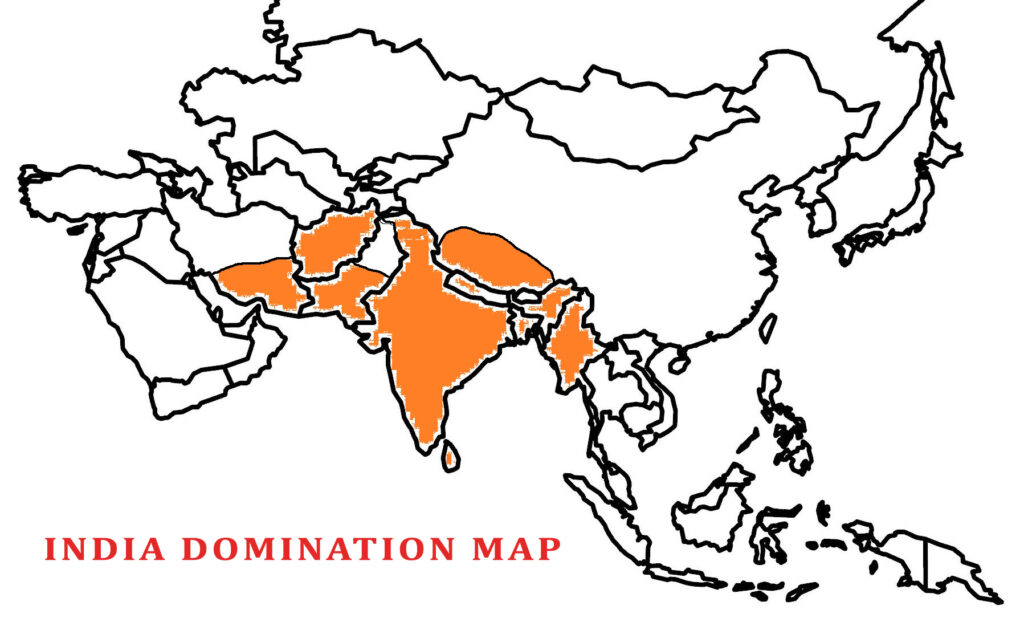
If India is to emerge as a decisive global power by 2035, it must abandon comforting narratives and confront hard structural truths. Nations do not rise on demographic size alone, nor on moral positioning, nor on rhetoric about civilizational greatness. They rise when they build institutions that reward production, encourage risk, expand knowledge, and project influence beyond their borders with speed and confidence. India today stands at a crossroads. It possesses scale, talent, and geopolitical opportunity—but it is held back by policy inertia, half-measures, and an aversion to structural domination, both internally and regionally.
Power is not accidental. It is engineered.
First, put the economic house in order
Every successful global power first creates overwhelming internal economic momentum. India missed a historic window between 2005 and 2020 when global capital was cheap, supply chains were mobile, and digital infrastructure allowed late movers to leapfrog. Instead of unleashing enterprise, India throttled it.
The rollout of the Goods and Services Tax should have been India’s great economic accelerant. Instead, it became a compliance labyrinth. A flat GST of 3% across all goods and services—simple, predictable, and universal—could have transformed India into a manufacturing and services magnet. Instead, high GST slabs of 18% and above, layered atop income tax, crushed consumption, discouraged formalization, and punished honest salaried citizens.
For years, India taxed income heavily and then taxed spending again. This double extraction came precisely when businesses needed capital accumulation, households needed spending power, and entrepreneurs needed breathing room. The result was predictable: risk aversion, capital flight, and under-investment in productivity.
A nation cannot build global dominance while treating its producers as tax evaders by default.
Infrastructure without services is an incomplete revolution
To the current government’s credit, physical infrastructure has seen genuine progress. Highways, ports, logistics corridors, and freight capacity have improved at a pace unseen in decades. The ports program, in particular, has been consistent and strategic. India today moves goods better than it did ten years ago.
But infrastructure without services is like hardware without software.
Railways exemplify this contradiction. Engineering innovation exists, but services remain stagnant. Railways should have been corporatised through equity participation, not reduced to outsourcing catering and cleaning. Partial privatisation through public equity would have unlocked capital markets, forced transparency, and created a vast ecosystem of railway-linked innovation—rolling stock, signaling, logistics tech, insurance, finance, and data services.
Instead, Railways remains a bureaucratic monolith, asset-rich but value-poor.
A modern economy does not hoard assets inside ministries; it spins them into platforms.
Missed synergies: Railways, post offices, and network power
India possesses two of the largest physical networks on the planet: the Railways and the Postal system. Yet they remain dramatically underutilised as service delivery engines.
Post offices and Railways should already be integrated into a unified national services platform—selling insurance, pension products, logistics services, last-mile communication, and digital identity solutions. RailTel’s vast fibre optic network should have been leveraged aggressively for national broadband, secure government communications, and private enterprise leasing.
China understood this early. State assets were not merely preserved; they were weaponised economically.
India still treats its networks as legacy burdens rather than strategic multipliers.
Defence R&D: Assembly is not power
Allowing private participation in defence manufacturing is necessary—but insufficient. What India has largely enabled so far is assembly, licensing, and screwdriver technology. Real power lies in intellectual property, original design, and systems integration.
A global power does not buy blueprints; it writes them.
Despite policy announcements, meaningful breakthroughs in private defence R&D remain scarce. Funding is cautious, procurement is slow, and risk-taking is minimal. Without deep, long-term capital and assured demand, no private player will attempt game-changing innovation.
The state must act as a venture capitalist, not merely a buyer.
Education: The unfinished foundation
No nation has ever achieved global dominance without elite, expansive, and state-backed education systems. On this front, India remains paradoxical. The New Education Policy is genuinely transformative in philosophy and structure. It has aligned Indian education closer to global standards, flexibility, and interdisciplinary learning. Students today are better positioned internationally than ever before.
Yet institutional scale remains frozen.
Two of India’s most powerful education brands—Kendriya Vidyalayas and Sainik Schools—remain trapped in administrative stasis. These institutions should be corporatised, granted operational autonomy, and allowed to expand at least 100-fold. Selling up to 20% equity to EdTech firms and venture capital would inject innovation without sacrificing public control.
Education is not a welfare scheme. It is national infrastructure.
Research must flow freely or not at all
India’s research ecosystem suffers from fragmentation, risk aversion, and bureaucratic choke points. Universities are not encouraged to commercialise research aggressively. Professors are not rewarded for entrepreneurship. Students are trained to pass exams, not build systems.
Contrast this with China’s universities, which have made world-class patent registration—both civil and military—a habit. Research is not ornamental; it is strategic.
Until Indian universities become IP factories, global leadership will remain aspirational.
Administrative domination: Speed is strategy
One of India’s greatest weaknesses is administrative tempo. Files move slowly. Decisions are layered. Accountability is diffused. In contrast, successful powers prioritise speed as a strategic advantage.
Administrative reform must go beyond digitisation. It must reward decisiveness, penalise delay, and flatten hierarchies. District collectors, PSU heads, and regulators must be empowered to act, not merely to refer.
Power that arrives late is no power at all.
Regional integration as a growth strategy
India’s rise cannot occur in isolation. Geography matters. Markets matter. Influence matters.
For India to truly prosper by 2035, it must integrate its neighbourhood economically, administratively, and culturally—at speed and scale. This does not mean crude conquest. It means decisive integration: rail links, energy grids, digital identity systems, education exchange, security coordination, and administrative harmonisation.
Regions such as northern Bangladesh, Nepal, Sri Lanka, and Tibet are natural economic extensions of the Indian subcontinent. Others—Sindh, Balochistan, parts of Afghanistan and coastal Iran—are historically, commercially, and strategically linked.
China has shown how rapid infrastructure and administrative integration creates irreversible influence. India must shed its hesitation and act with clarity.
Cultural confidence without apology
Cultural influence is not imposed; it is normalised. Language, media, education, entertainment, and commerce carry values far more effectively than diplomacy alone. India already has cultural capital—but it lacks coordinated projection.
Universities, media platforms, digital services, and civil institutions must actively export Indian norms, standards, and frameworks. Soft power must be engineered, not romanticised.
Civilisations that hesitate to assert themselves are eventually defined by others.
Territorial reality and strategic clarity
Territory is not merely land. It is infrastructure density, administrative presence, and economic relevance. Where railways run, where schools teach, where hospitals operate—there lies real control.
India must think territorially again, not in colonial terms, but in functional ones. Influence must be backed by the ability to deploy administrators, engineers, teachers, and systems within months, not decades.
The 21st century belongs to states that can integrate space faster than rivals.
The cost of delay
Every year of hesitation compounds future costs. The world is fragmenting into blocs. Supply chains are regionalising. Power is consolidating. India’s window is open—but it will not remain so indefinitely.
By 2035, India can be a rule-maker—or a rule-taker.
The difference lies not in slogans, but in execution.
Conclusion: Domination as capacity, not aggression
When we speak of territorial, cultural, administrative, and economic domination, we must strip the word of its emotional baggage and understand it for what it truly means: overwhelming state capacity.
Capacity to build.
Capacity to integrate.
Capacity to influence.
Capacity to act decisively.
India does not lack talent. It lacks institutional boldness.
If India is serious about winning globally by 2035, it must stop managing decline and start engineering dominance—first at home, then across its natural sphere of influence.
History does not reward the cautious. It rewards the prepared. And preparation begins now.