
Nation is slowly replacing community. Most states of India today face this conundrum. Bengal is full of Bangladeshis, Biharis, Assamese, Odias. Delhi is full of every community from every part of the country and even from abroad
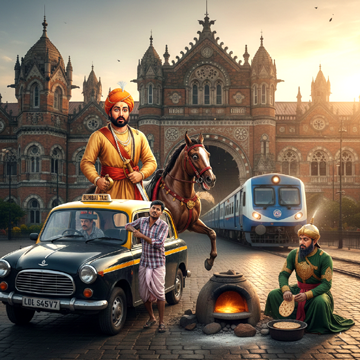
It is a strange, uncomfortable question to ask in 21st-century India: who is a Marathi today? Not “who was a Marathi”, not “who are the Marathas in history books”, but who occupies that identity in lived, everyday, economic, cultural reality. The question is not accusatory and it is not nostalgic for the sake of nostalgia. It is, at its core, a lament — a quiet, gnawing sadness felt by many ordinary Maharashtrians who look around their cities, especially Mumbai, and wonder where exactly they fit into the ecosystem they themselves helped nurture.
India has changed. The nation is slowly replacing the community as the primary identity marker. “Unity in diversity” was a proud slogan of a newly independent country trying to stitch itself together in the 1950s and 1970s. Today’s India is less a mosaic of protected cultural tiles and more a melting pot driven by economic mobility, migration, aspiration, and national pride. Bengal is no longer only Bengali; it is filled with Bangladeshis, Biharis, Assamese, Odias, Nepalis. Delhi is a compressed version of the subcontinent, home to every Indian language, religion, caste, and increasingly, to foreigners who come to work, study, or trade. Maharashtra — and especially Mumbai — is perhaps the most intense expression of this phenomenon.
The “Marathi issue” is not an argument against migration, nor a complaint about outsiders. It is not even a political demand. It is a deeply personal reckoning with reality. When a Marathi person falls ill, they go to Reliance Hospital, Kokilaben Hospital, Lilavati, Bhatia — institutions built and owned largely by Gujarati, Parsi, or non-Marathi capital. When they stay at a luxury hotel, it might be a Taj property, owned historically by Parsis. When they read newspapers like The Times of India, Maharashtra Times, Loksatta, or Lokmat, many of these publications are owned by Marwari business families. They watch Zee TV, owned by a Marwadi, or ABP Majha, owned by a Bengali media baron. Their mobile phone and SIM card are Jio, owned by a Gujarati conglomerate. The flat they bought is likely from a Lodha (Marwadi), a Shah or Sanghvi (Gujarati), or a Hiranandani (Sindhi).
They travel to the station in a rickshaw driven by a Yadav or Sharma from Uttar Pradesh. Their Uber driver is Ahmad or Tariq. Breakfast comes from a Udupi restaurant run by Shettys from coastal Karnataka; the evening beer bar is owned by the same community. The bhajiwala is Bihari; the fruit seller is from UP or Bihar. Pickles and papads come from Rambandhu, owned by Marwadi Rathis. Even the iconic Mumbai vada pav, through the JumboKing chain, is owned by a Gupta. Electricity comes from Tata or Adani. Birthday cakes are bought from Iyengar bakeries. The carpenter is from Rajasthan or UP. The kirana shop is owned by a Kutchi Gujarati. The mechanic is Abdul. The tailor is Sindhi. The meat seller is Usman bhai from UP. Amazon and Swiggy deliveries are handled by migrants from the Hindi heartland or Muslims from across states.
Meanwhile, Marathi-medium schools are shutting down or renting classrooms for yoga and classical dance classes. Rajya Sabha nominations by Marathi politicians increasingly go to non-Maharashtrians. The company one works for is owned by a Gujarati, Punjabi, or Marwadi. Bollywood films are dominated by Chopras, Johars, Kapoors, Khans, Singhs, Khannas. Marathi films flop within days due to a shrinking local audience. Even Indian cricket’s present heroes are Sharmas, Kohlis, Bumrahs, Shamis, Varmas. In this everyday lived experience, the Marathi person asks, almost helplessly: so what exactly do I do with my Marathi pride?
This is not false pride. Maharashtrians are deeply aware of their legacy. The most legendary king in Indian history, Chhatrapati Shivaji Maharaj, was a Maratha. Some of India’s greatest filmmakers, singers, social reformers, scientists, cricketers, and thinkers were Marathi. There have been legendary Marathi industrialists, artists, and administrators. But the operative word that hurts is “were”. Pride is anchored firmly in the past. The present feels borrowed, shared, diluted, or outsourced.
Yet, this sense of loss must be understood honestly. The Marathi presence has not vanished; it has simply concentrated itself in specific sectors. The police constable, the municipal clerk, the BEST bus driver, the BMC peon — these are overwhelmingly Marathi. Teaching and non-teaching government staff are Marathi. The backbone of municipal administration remains local. Marathis are not cabbies in large numbers because they cannot survive on razor-thin margins, sleeping in vehicles and eating biscuits, as migrant workers often do. Marathis have families to feed, social obligations, and roots that migrants do not. They do not have deep pockets for real estate speculation or industrial scale risk-taking. But they are educated, dependable, and strong in services.
And here lies a truth that often gets buried under resentment: the Marathi manoos may not dominate capital, but he has created something far more valuable — an ecosystem. Mumbai did not become India’s financial, cultural, sporting, and artistic capital because of any one community’s money. It became so because of an environment of radical accommodation, openness, and non-discrimination. Gujaratis and Marwaris prosper in Mumbai in ways they often cannot replicate in Gujarat or Rajasthan. Punjabis create cinematic magic in Mumbai that Punjab itself cannot sustain. A cricketer like Yashasvi Jaiswal can bloom here like nowhere else. This is not accidental.
This ecosystem was seeded centuries ago. When the British began developing Bombay’s seven islands, they invited business communities — Gujaratis, Parsis, Bohris, Prabhus, Iranians, Jews — to invest. This happened during Shivaji Maharaj’s time. These communities had one non-negotiable condition: the land must be free of discrimination based on religion, race, language, caste, or creed. The horrific example of Portuguese Goa, with its Inquisition, was fresh in their minds. Maharashtra, culturally shaped by the Bhakti movement and Shivaji’s inclusive administration, agreed. That DNA never left Mumbai.
That is why Mumbai remains India’s engine across finance, sports, arts, culture, and music. And that is why India needs not one but at least half a dozen Mumbais. Everyone piling into the only existing one will solve nothing. Protecting this ecosystem is not the responsibility of the Marathi manoos alone; it is the duty of every Indian who benefits from it.
At the same time, introspection is unavoidable. Many Marathis admit that insecurity has grown not because others encroached, but because of internal complacency — a tendency to pass the buck, to avoid risk, to pull each other down rather than lift each other up. Unlike Jain or Gujarati business networks that actively support new entrepreneurs, Marathi society often finds faults, indulges in leg-pulling, and celebrates cynicism over ambition. Cultural practices are outsourced to hotels; Manglagaur, haldi-kumkum, Shravan savashini rituals fade away. Adaptability is extended generously to other cultures but rarely invested in preserving one’s own.
Mumbai itself would collapse without Marathi participation — kamwali bais, dabbawalas, mathadi workers, local train drivers, Ganpati mandals. The sabudana vada has no parallel. Abhangs are sung across Hindustani and Carnatic stages. Maharashtra’s bhakti and spiritual traditions are unmatched. And yet, respect is fragile. When locals assault street vendors from UP or Bihar, the respect Maharashtrians receive when they travel outside their state drops to zero. Covid was a reminder: when migrants left Mumbai, the city felt hollow. The day UP and Bihar create sufficient opportunities at home, Mumbai will feel the heat even more.
This tension between regional identity and national identity is not unique to Maharashtra. It is visible globally, especially in the Indian diaspora. In the United States, most people of Indian origin identify primarily as “Indian” rather than Marathi, Bengali, or Tamil. To Americans, internal Indian distinctions are invisible. Diaspora life encourages unity; survival abroad demands cohesion. Cultural preservation happens privately through associations, temples, and language classes, but public identity becomes national. Second-generation Indian Americans increasingly call themselves “Asian Indian”, blending national pride with American belonging.
India itself is undergoing a similar shift. Nation is slowly replacing community. That does not mean regional cultures must die. It means they must evolve, assert themselves through excellence rather than entitlement, and contribute visibly to the present, not only the past. Marathis cannot only bask in Shivaji Maharaj, Bal Gandharva, Pu La Deshpande, or Lata Mangeshkar. They must create the next legends — in business, technology, art, science, cinema, and global influence — so future generations can say “are”, not “were”.
Being Marathi today may no longer mean dominance. It may mean stewardship. It may mean holding together a city that belongs to everyone, while quietly carrying forward a culture rooted in dignity, spirituality, and resilience. If that role is embraced consciously, Marathi pride does not diminish — it matures. Jai Maharashtra.