At the centre of Dubai’s vision stands His Highness Sheikh Mohammed bin Rashid Al Maktoum, Vice President and Prime Minister of the UAE and ruler of Dubai. Sheikh Mohammed’s philosophy has been consistent: oil is finite, human capital is not
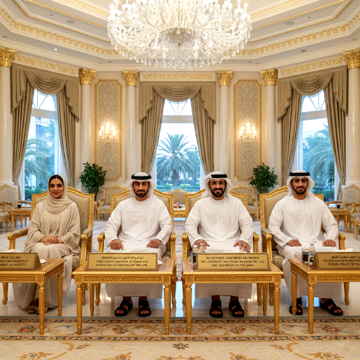
Dubai has always marketed itself as a city that thinks decades ahead, not election cycles ahead. What distinguishes it from many fast-growing global cities is not merely speed of construction or architectural bravado, but an almost obsessive focus on livability in an extreme environment. The proposed 93-kilometre air-conditioned cycling and walking network—popularly referred to as The Loop—is not an isolated infrastructure idea. It is a logical extension of a broader vision articulated and relentlessly executed by Dubai’s ruling family over the last three decades: that a desert city can become one of the world’s most comfortable, safest, healthiest and opportunity-rich urban societies without losing cultural openness or social stability.
It’s the Prime Minister of Dubai: His Highness Sheikh Mohammed
At the centre of this vision stands His Highness Sheikh Mohammed bin Rashid Al Maktoum, Vice President and Prime Minister of the UAE and Ruler of Dubai. Sheikh Mohammed’s philosophy has been consistent: oil is finite, human capital is not. Under his leadership, Dubai pivoted early toward services, logistics, tourism, finance, technology and culture. The Loop project fits directly into his long-standing emphasis on happiness, health and productivity. Sheikh Mohammed has repeatedly argued that cities of the future must reduce friction in daily life—long commutes, heat stress, pollution and sedentary lifestyles all sap human potential. A climate-controlled, car-free mobility spine directly addresses these concerns while signalling that Dubai intends to remain habitable even as global temperatures rise.
Crown Prince of Dubai: Sheikh Hamdan
The Loop also reflects the influence of Sheikh Hamdan bin Mohammed bin Rashid Al Maktoum, Crown Prince of Dubai. Sheikh Hamdan, often described as the public face of Dubai’s next generation, has championed fitness, cycling, endurance sports and outdoor activity across the emirate. Initiatives such as the Dubai Fitness Challenge, the expansion of cycling tracks in Meydan and Al Qudra, and incentives for community sports all bear his imprint. The Loop institutionalises what Sheikh Hamdan has promoted culturally: daily movement as a norm rather than a luxury. By integrating vertical farms, gyms, parks and rest zones into a transport corridor, the project reframes infrastructure as a wellness ecosystem rather than mere concrete.
First Deputy Ruler, Minister of Finance: Sheikh Maktoum
Another key architect of Dubai’s future is Sheikh Maktoum bin Mohammed bin Rashid Al Maktoum, First Deputy Ruler of Dubai and Minister of Finance of the UAE. His role has been crucial in aligning Dubai’s urban ambitions with fiscal discipline and global investor confidence. Projects like The Loop are capital-intensive, but they are also long-term cost reducers—lower healthcare expenditure, reduced fuel imports, and higher productivity. Sheikh Maktoum has overseen reforms that make Dubai one of the easiest places in the world to do business, ensuring that ambitious infrastructure projects are backed by stable revenues, diversified income streams and investor trust.
Sheikha Latifa: Chairperson, Dubai Culture and Arts Authority
Equally significant is Sheikha Latifa bint Mohammed bin Rashid Al Maktoum, Chairperson of Dubai Culture and Arts Authority. Her work underscores that Dubai’s future is not meant to be sterile or purely functional. Urban spaces, including The Loop, are envisioned as cultural corridors—hosting art, community interaction and creative expression. This emphasis on human experience explains why The Loop includes community spaces and green zones rather than functioning solely as a transit tunnel. Dubai’s leadership understands that a livable city must nourish the mind as much as the body.
The Loop: Walking and cycling in a plexiglass tunnel at 23 Celcius
The technical backbone of The Loop comes from URB, a Dubai-based urban design firm, but the political will comes directly from the top. The idea of a 23-degree, year-round climate-controlled mobility network addresses Dubai’s most obvious constraint: heat. Instead of accepting climate as destiny, Dubai chooses to engineer around it. Kinetic tiles that harvest energy from footsteps, renewable power sources, vertical farming for local food production and autonomous transport integration are not gimmicks; they are part of a deliberate strategy to future-proof urban life against climate volatility and resource scarcity.
Dubai’s approach to lifestyle stands out sharply in the Middle East. In terms of health, the emirate has invested heavily in preventive care, world-class hospitals and insurance coverage mandates. Facilities such as Dubai Healthcare City attract global talent, while regulation ensures quality and accountability. The push for walkability and cycling through projects like The Loop reflects a shift from reactive healthcare to proactive wellness. Compared to Riyadh or Dammam, where car dependency remains overwhelming, Dubai is actively trying to design inactivity out of daily life.
Education is another pillar of Dubai’s attractiveness. The emirate hosts hundreds of international schools offering British, IB, American, Indian CBSE, ICSE and other curricula, alongside global universities with branch campuses. Sheikh Mohammed’s belief that “the race for excellence has no finish line” has translated into regulatory frameworks that encourage competition and innovation in education. For expatriate families, particularly Indians, this diversity is a decisive advantage over cities like Jeddah or Dammam, where options are improving but remain more limited.
Safety is where Dubai consistently outperforms not just the region but many Western cities. Strict law enforcement, low crime tolerance and advanced surveillance systems have created an environment where families feel secure at all hours. Sheikh Mohammed has personally emphasised that safety is non-negotiable because it underpins economic confidence and social harmony. Compared with Riyadh, which has made significant strides but still grapples with rapid social change, Dubai offers a more mature balance between openness and order.
Employment opportunities remain Dubai’s strongest magnet. From finance and logistics to technology, media, aviation and renewable energy, the city offers breadth unmatched in the Gulf. Free zones, labour reforms, long-term visas and pathways to golden residency have been driven by leadership decisions aimed at retaining global talent. Sheikh Hamdan has been instrumental in promoting startup ecosystems and digital government, while Sheikh Maktoum’s fiscal reforms have kept Dubai competitive during global downturns. Compared to Abu Dhabi, which offers stability and government-backed employment, Dubai provides faster career mobility and entrepreneurial dynamism. Compared to Riyadh, which is still transitioning from a state-centric economy, Dubai feels more globally integrated and execution-oriented.
Hindu temple in Abu Dhabi
Family life in Dubai benefits from this ecosystem of safety, education and employment. Parks, beaches, community centres and now future projects like The Loop create spaces where families can spend time without stress. Importantly for Indian families, Dubai offers freedom to practise the Hindu religion openly. The construction of the Hindu Mandir in Abu Dhabi, supported by the UAE leadership including Dubai’s rulers, sent a powerful signal of religious tolerance. In Dubai itself, Hindu temples operate legally, festivals like Diwali are celebrated publicly, and dietary needs are widely accommodated. This level of religious freedom is unparalleled in much of the Middle East and stands in contrast to Saudi cities like Riyadh or Dammam, where reforms are ongoing but public religious expression remains more constrained.
Lifestyle comparisons further highlight Dubai’s uniqueness. Abu Dhabi is more conservative, quieter and government-driven, appealing to families seeking stability and less hustle. Dubai is faster, more cosmopolitan and opportunity-dense. Riyadh is undergoing a dramatic transformation under Vision 2030, but it remains a city in transition, balancing tradition with rapid modernisation. Jeddah offers cultural depth and coastal charm but lacks Dubai’s infrastructure scale and regulatory clarity. Dammam is primarily industrial and functional, not lifestyle-oriented. Dubai, by contrast, has spent decades refining itself as a place where ambition, comfort and diversity coexist.
The Loop symbolises where Dubai wants to go next. It is not just about cycling tunnels; it is about redefining urban life in a desert metropolis. Sheikh Mohammed’s vision of a “city that works for people, not the other way around” is being translated into steel, glass and climate-controlled corridors. Sheikh Hamdan’s advocacy for fitness is becoming structural rather than optional. Sheikh Maktoum’s financial stewardship ensures sustainability, while Sheikha Latifa’s cultural lens ensures soul.
By 2040, if The Loop achieves its goal of enabling 80 percent of residents to commute by foot or bicycle, Dubai will have accomplished something few cities globally have managed: a genuine shift away from car dependency without sacrificing comfort. In a region often associated with excess energy consumption, Dubai is attempting to demonstrate that luxury and sustainability are not opposites.
Ultimately, Dubai’s story is not about tunnels or temperature control. It is about governance with a long memory and a longer horizon. The royal family’s hands-on involvement, named accountability and willingness to experiment have turned vision into lived reality. For millions of residents—Indian professionals, entrepreneurs, families and global citizens—Dubai represents a rare proposition in the Middle East: a place where the future is not merely promised, but actively constructed, kilometre by climate-controlled kilometre.